
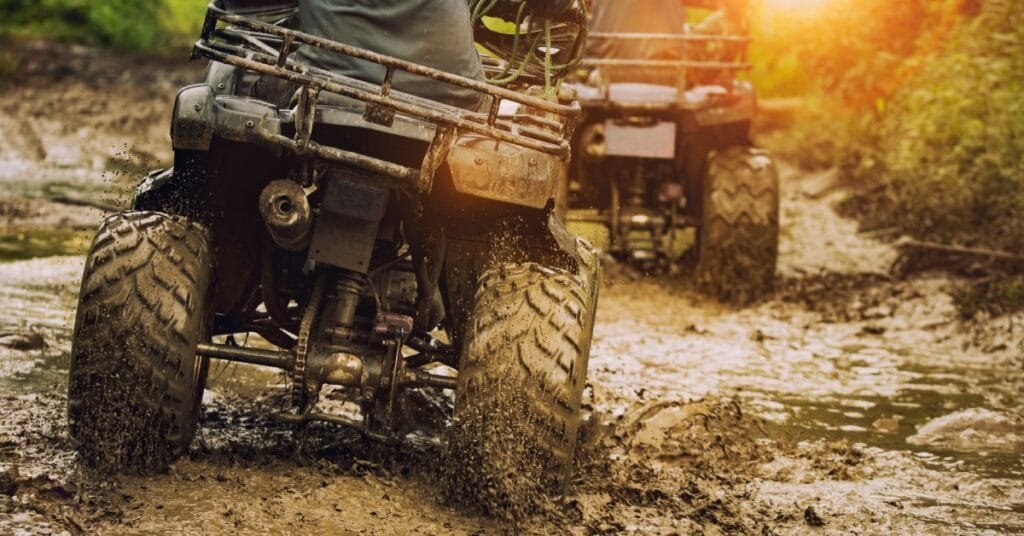
Charlotte-area riders are lucky to have premier off-road destinations like Uwharrie National Forest and Carolina Adventure World right in their backyard. While tearing through red clay and dense pines offers an incredible adrenaline rush, the power of these machines requires significant skill and respect.
Unfortunately, preventable errors can turn a fun day on the trails into a costly repair bill or a serious emergency room visit. Keep reading to understand the common mistakes every ATV rider should avoid when off-roading.
1. Riding Without Proper Safety Gear
The most common and dangerous mistake a rider can make is skipping safety equipment. In the heat of a North Carolina summer, the temptation to ride in a t-shirt, shorts, and sneakers is strong, but the consequences of doing so can be devastating. A Department of Transportation (DOT) approved helmet serves as your first line of defense against traumatic brain injuries, which remain the leading cause of death in ATV accidents.
Beyond the helmet, full protective gear is non-negotiable for a safe ride. Goggles shield your eyes from debris and keep your vision clear at high speeds. Gloves provide the grip to control the handlebars in sweat and rain while protecting your hands from blisters and abrasions. Sturdy over-the-ankle boots prevent foot injuries and burns from the hot engine, while long sleeves and pants protect your skin from severe road rash if you take a spill.
2. Ignoring Weather Conditions
The weather in the Carolinas is notorious for its unpredictability. A sunny morning in Charlotte can quickly turn into a severe afternoon thunderstorm, creating hazardous riding conditions that catch unprepared riders off guard. Ignoring the forecast is a recipe for disaster.
Extreme heat poses a significant risk to both the rider and the machine. Riding in high temperatures without adequate hydration can cause heat exhaustion or heat stroke, impairing your judgment and reaction time. Before you load the trailer, check the local forecast for your destination. Respecting nature’s power keeps you safe and prevents you from getting stranded miles from the trailhead in a dangerous storm.
3. Riding Under the Influence
Operating an ATV requires sharp reflexes, keen situational awareness, and the ability to make split-second decisions. Consuming alcohol or drugs before or during a ride completely compromises these faculties.
Riding under the influence is not just reckless; it is illegal. In North Carolina, you can face legal penalties for operating an ATV while impaired, similar to driving a car on the highway. This behavior endangers everyone on the trail. A sober rider is a safe rider, so save the celebratory drink for after the ride when the keys are safely put away.
4. Exceeding ATV’s Capacity
Every ATV rolls off the assembly line with manufacturer-specific guidelines on weight limits and passenger capacity. Ignoring these limits is a standard error that can cause mechanical failure and loss of control. Most ATVs are for a single operator only. When you add a passenger to a single-rider machine, you disrupt the center of gravity and restrict the operator’s ability to move effectively.
Overloading the ATV also puts excessive strain on the suspension, brakes, and engine. The vehicle becomes unstable, particularly during turns or on steep inclines, significantly increasing the risk of a rollover. If you plan to ride with a partner, invest in a “two-up” ATV with a longer wheelbase and a dedicated passenger seat. Respecting the machine’s design limitations keeps the rubber side down and prevents catastrophic accidents.
5. Failing to Maintain Your ATV
Another common mistake ATV riders should avoid when off-roading is not taking care of their machine before the excursion. An ATV is a high-performance machine that operates in harsh conditions, including mud, water, rocks, and dust. Neglecting regular maintenance is a surefire way to shorten your vehicle’s lifespan and risk a dangerous breakdown in remote areas. Some riders may skip pre-ride inspections, but a loose bolt, a frayed brake cable, or low oil can cause significant issues deep in the woods.
You must develop a routine of checking your ATV before every outing. Check your tire pressure, as improper inflation affects handling and stability. Inspect the air filter to confirm that the engine breathes cleanly, and verify that all fluids—oil, coolant, and brake fluid—are at appropriate levels. Test your brakes and throttle response before hitting the trail.
6. Not Knowing the Area
Exploring new trails is part of the adventure, but riding blind into unfamiliar territory invites danger. Riders who fail to scout the area or consult a map may encounter obstacles beyond their skill level, such as steep drop-offs, hidden stumps, or deep ravines. Getting lost in vast riding areas like Uwharrie can quickly turn a fun afternoon into a survival situation, especially as daylight fades.
Competent riders utilize GPS devices or precise trail maps to maintain their bearings. Pay attention to trail markers and difficulty ratings. If you are new to an area, stick to established paths and avoid blazing your own trail, which can cause unexpected hazards and environmental damage. Understanding the terrain helps you anticipate challenges and adjust your riding style, keeping you in control and on track.
7. Riding Alone
Solitude in nature is appealing, but riding an ATV alone carries risks that outweigh the reward. If you crash, suffer an injury, or experience a mechanical failure while alone, you have no immediate assistance. In many remote riding locations, cell phone service is nonexistent, leaving you unable to call for help. A minor injury like a twisted ankle becomes a life-threatening ordeal if you cannot walk out of the woods.
Riding with a buddy ensures that help is always available. A partner can assist with winching a stuck vehicle, provide first aid, or ride for help if an accident occurs. The buddy system acts as your safety net. If you must ride alone, always inform someone of your exact location and approximate return time so search parties know where to look if you fail to check in.
8. Crossing Deep Water
The sight of a water crossing or a mud hole is tempting for many riders, but water presents hidden dangers that can ruin your machine and threaten your safety. Deep water can conceal large rocks, sudden drop-offs, or submerged logs that can throw you from the vehicle. Strong currents in streams or rivers can also sweep an ATV downstream in seconds.
From a mechanical standpoint, water is the enemy of your engine. If water enters the air intake, it causes “hydrolock,” which instantly stops the piston and often destroys the engine block. Water crossing also affects your ATV’s spark plugs by causing thermal shock, cracking insulators, and more. Stick to the edges or find a bridge to keep your engine dry and your ride safe.
Conclusion
The thrill of off-roading in the Carolinas is an experience worth pursuing, but it requires a commitment to safety and responsibility. By avoiding these common mistakes, you significantly reduce the risk of injury and keep your day filled with fun and adventure instead of danger. Smart riding allows you to push your limits safely and fully enjoy the rugged beauty of our region.