 Articles
Trend Radar
◆Matchbox The Movie: Toy-Car Nostalgia Meets Your Most Chaotic Group Chat◆5 KPIs To Optimize Your Manufacturing Workflow◆39kg is Not an Aesthetic: Why Choi Yena’s “Discipline” is Actually a Warning Sign◆5 Elements Graders Look for in Trading Cards◆Precision Engineering Secrets That Save Time and Money◆Why Stronger Poles Matter for Modern Power Grids◆How Social Media Is Evolving the Way We Mod Cars◆Common Signs Your Car’s Cooling System Is Struggling◆Matchbox The Movie: Toy-Car Nostalgia Meets Your Most Chaotic Group Chat◆5 KPIs To Optimize Your Manufacturing Workflow◆39kg is Not an Aesthetic: Why Choi Yena’s “Discipline” is Actually a Warning Sign◆5 Elements Graders Look for in Trading Cards◆Precision Engineering Secrets That Save Time and Money◆Why Stronger Poles Matter for Modern Power Grids◆How Social Media Is Evolving the Way We Mod Cars◆Common Signs Your Car’s Cooling System Is Struggling
The Environmental Impact of Industrial Cleaning
Industrial cleaning relies on harsh chemicals that harm the environment. Learn how sustainable methods like hydroblasting reduce pollution and waste.

Emma Radebaugh
Industrial cleaning maintains hygiene and safety standards in manufacturing plants, warehouses, and large facilities. While necessary for operations, traditional cleaning methods often rely on potent chemical agents and abrasive techniques. These industrial cleaning practices contribute significantly to environmental degradation through chemical runoff, air pollution, and waste generation.
Facilities must understand the specific environmental costs associated with their maintenance routines. Recognizing these impacts allows businesses to make informed decisions about their cleaning protocols. Transitioning to sustainable methods reduces the ecological footprint of industrial operations.
Key Chemicals in Industrial Cleaning
Many industrial cleaning agents contain volatile organic compounds (VOCs) and other hazardous substances. Solvents like trichloroethylene and perchloroethylene appear frequently in degreasers and heavy-duty cleaners. These chemicals break down grease and grime effectively but pose serious risks to human health and the environment.
Phosphates and ammonia also feature prominently in industrial detergents. While they enhance cleaning power, they persist in the environment long after use. Chlorine bleach, another common disinfectant, reacts with organic materials to form harmful byproducts.
Environmental Consequences
The disposal of industrial cleaning waste often leads to water contamination. When facilities wash chemicals down drains, these substances eventually reach local waterways. This runoff disrupts aquatic ecosystems by altering pH levels and introducing toxins that harm fish and wildlife.
Air quality suffers as well due to the evaporation of VOCs from cleaning solvents. These compounds contribute to the formation of ground-level ozone and smog. Poor air quality affects the immediate vicinity of the facility as well as the broader community.
Soil contamination occurs when improper disposal methods or accidental spills release chemicals into the ground. These toxins leach into the soil, affecting plant growth and potentially contaminating groundwater sources. Long-term accumulation of these substances renders land unusable for agriculture or other purposes.
Sustainable Practices and Alternatives
Adopting eco-friendly cleaning methods mitigates these negative impacts. Green cleaning involves using products certified to be free from harmful chemicals and VOCs. Biodegradable detergents and plant-based solvents offer effective cleaning power without the environmental toll.
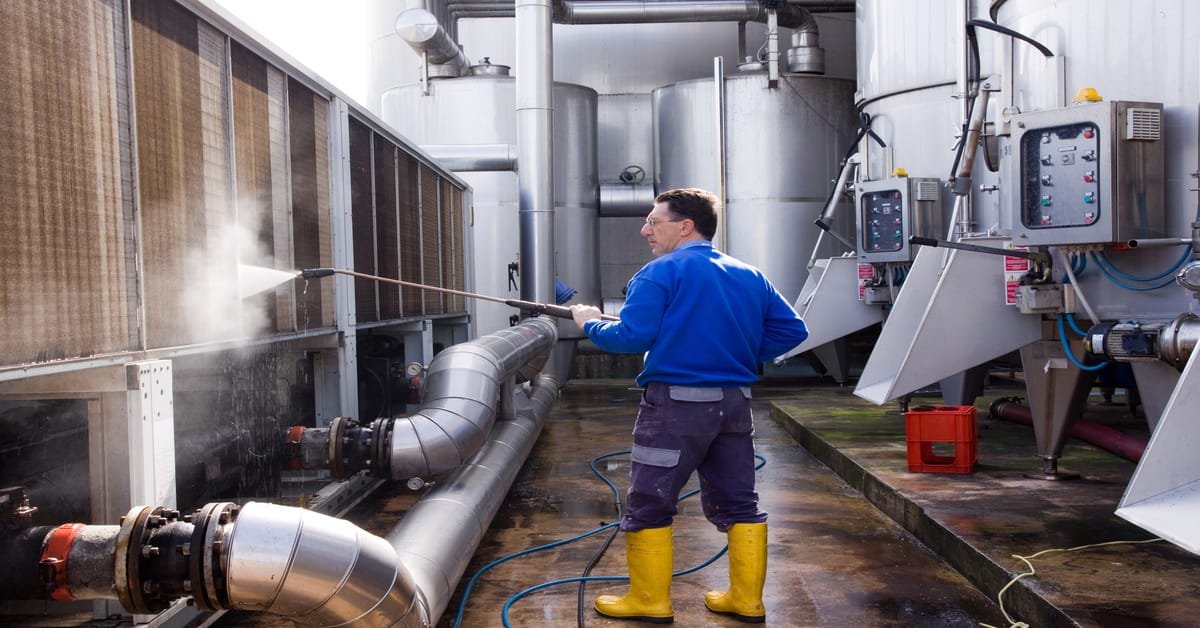
Facilities can also replace abrasive techniques with safer alternatives. For example, hydroblasting uses high-pressure water streams to remove paint and debris. This method eliminates the need for abrasive materials like sand, which creates hazardous dust during sandblasting. Hydroblasting is safer than sandblasting because it produces less waste and reduces the release of airborne particulates.
Implementing water recycling systems further enhances sustainability. These systems capture and treat used water, allowing it to be reused for future cleaning tasks. This approach significantly reduces water consumption and prevents contaminated runoff from entering the ecosystem.
Switch to Green Cleaning Today
The shift toward sustainable industrial cleaning protects the environment and improves workplace safety. Review your current cleaning protocols to identify areas for improvement. Choose biodegradable products and modern techniques like hydroblasting to reduce your business’s ecological impact.
Share this signal
More Like This