
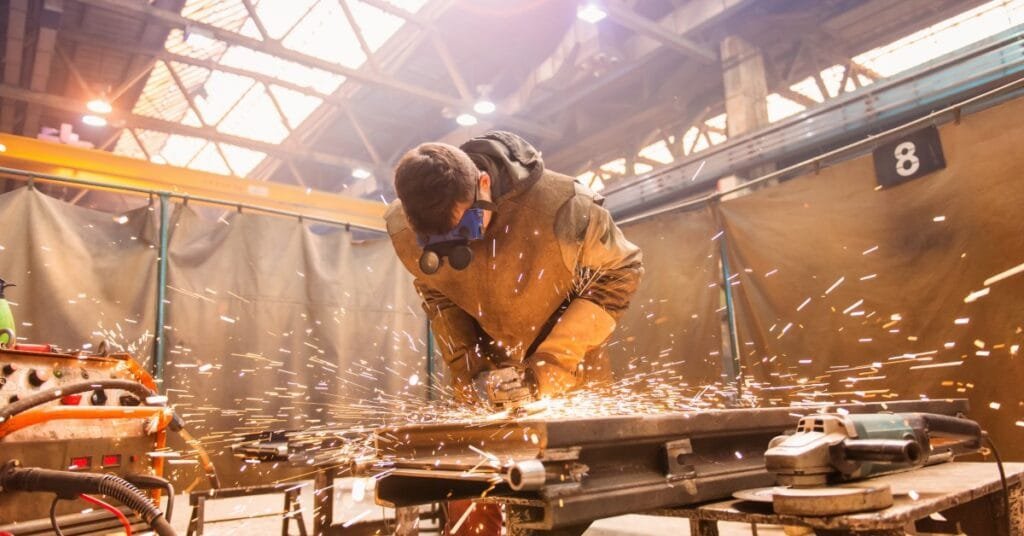
You just finished a grind, laid down some beads, and the project looks fire. But looking good simply isn’t enough. If that rack collapses or the chassis snaps, it’s game over. You need welds that hold up under pressure.
We’re talking about building stuff that lasts, not just stuff that looks cool on Instagram. Here is how you ensure your metalwork stays solid and safe, and a few ways to make your welding projects stronger structurally.
Don’t Sleep on the Prep
You hear it all the time, but most people still slack off here. Rust, oil, paint, and mill scale are the enemies of a strong bond. They cause porosity, which basically fills your weld with tiny air bubbles. Those bubbles make the joint weak.
Grab your angle grinder or a wire wheel and strip that base material down to shiny, bare metal. Do this before you even think about striking an arc. Clean metal fuses better. It really is that simple. If you want a weld that holds a ton of weight, you must start with a clean slate.
Dial In Your Settings
Running your machine on the wrong settings guarantees failure. If you run too cold, the filler metal just sits on top of the base metal without actually fusing into it. We call that cold lap, and it snaps easily. If you run too hot, you undercut the metal, creating a weak point right next to the weld.
Check the reference chart inside your machine door or use an app. Test your settings on a piece of scrap metal that matches your project thickness. Listen for that consistent sizzle—like bacon frying—to know you hit the sweet spot.
Rethink Your Joint Design
Slapping two pieces of metal together and welding the seam works for some things, but heavy-duty projects need more. You need to increase the surface area of the weld.
If you are welding thick plates, bevel the edges with a grinder to create a V-groove. This allows the weld to penetrate all the way through the joint, rather than just sitting on the surface. Full penetration equals maximum strength.
Use Geometry to Your Advantage
Sometimes the weld is perfect, but the design fails. You can’t rely on the weld alone to do all the heavy lifting. Design your project to distribute stress.
Triangles are the strongest shape. Add gussets—small triangular pieces of metal—to corners to stop them from flexing. If you work with thinner materials, use strengthening techniques to reinforce sheet metal so that it doesn’t warp or buckle under load. Adding a simple flange or rolling a bead into a flat panel creates rigidity without adding weight.
Manage Your Heat Input
Pumping too much heat into one spot weakens the metal surrounding the weld. This is the Heat Affected Zone (HAZ), and it’s often where cracks start. You need to control how much heat you put into the part.
Try these tactics to keep heat in check:
- Tack weld the entire piece first to keep everything aligned.
- Use the skip welding method to distribute heat evenly across the joint.
- Let the metal cool down naturally between passes.
- Clamp your workpiece tight to stop it from moving or warping.
Welding is engineering on the fly. Take these tips, hit the shop, and build something that outlasts the hype. Keep practicing, keep grinding, and keep your beads tight. Your welding projects will be stronger structurally no matter what they withstand.