
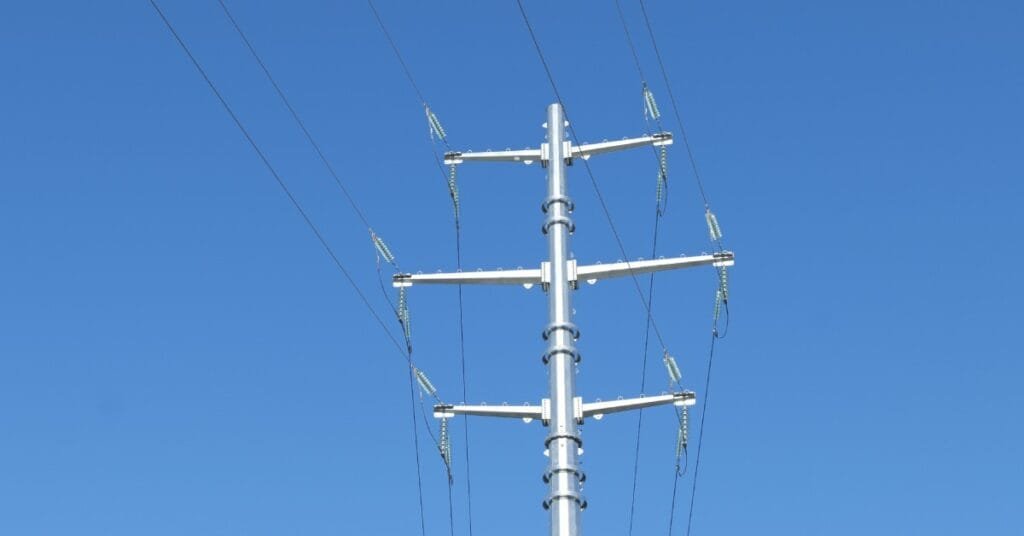
When we talk about upgrading the power grid, the conversation often turns to high-tech solutions like smart meters, renewable energy integration, and AI-driven load balancing. While these technologies are crucial, they all rely on a fundamental, often overlooked component: the utility pole.
These humble poles must withstand severe weather and ever changing weight requirements, something wooden structures are struggling to do. Using stronger poles are vital for modern power grids to ensure reliable, safe, and efficient energy delivery to everyone.
Weathering the Storm
The most immediate argument for stronger poles is extreme weather. From ice storms in Texas to hurricanes in Florida and wildfires in California, grid infrastructure is under constant assault. Traditional wood poles, while effective for over a century, have limitations. They can rot, snap under heavy ice loads, or become fuel for wildfires.
Modern alternatives, such as steel, concrete, and ductile iron, offer significantly higher durability. Stronger poles are engineered to withstand higher wind speeds and heavier loads. This “hardening” of the grid means fewer outages during storms and faster restoration times when damage does occur. When the physical backbone of the grid stays standing, the lights stay on.
Supporting Heavier Equipment
The modern grid is heavier than the grid of the 1950s. We aren’t just stringing simple copper wires anymore. Today’s utility poles must support a complex array of hardware, including:
- Transformers: As household energy consumption grows (think EV chargers and heat pumps), transformers are getting larger and heavier.
- Telecommunications: 5G small cells and fiber optic cables often share space on utility poles, adding significant weight and wind drag.
- Smart Grid Tech: Sensors, automated switches, and reclosers require stable mounting points.
A standard Class 4 wood pole might not have the structural integrity to handle this increased payload safely. Upgrading to stronger, higher-class poles ensures that the infrastructure can physically support the technological advancements we are deploying.
Enhancing Grid Reliability and Safety
A broken pole is more than an inconvenience; it is a safety hazard. Downed lines can cause electrocution, start fires, and block roadways during emergencies. Installing stronger poles reduces the risks associated with utility lines.
Even as grids become more reliable, we continue to build more and need a larger network for communities to utilize. This is why materials like concrete and ductile iron are important for the building process. Ductile iron plays a crucial role in expanding the power grid in a reliable manner that allows us to operate safely without the danger of downed lines or power outages.
Building a Resilient Future
The power grid is the circulatory system of modern society, so it requires stronger utility poles. As we transition toward electrification and renewable energy, that system needs a skeleton strong enough to support it.
Upgrading utility poles isn’t the most glamorous part of grid modernization, but it might be the most important. The future of energy is high-tech, but it still needs a strong place to stand.